More Threads and Biren’s GPU Iteration Race: China’s General-Purpose AI Compute Path
China’s domestic AI hardware effort is not following one architectural route. Some companies emphasize specialized neural processors. Others are pursuing programmable GPUs that can support a broader mix of training, inference, and general computing workloads.

Moore Threads and Biren belong to that second conversation, but their strategies differ. Moore Threads presents a full-function GPU platform spanning AI and graphics. Biren has emphasized high-performance data-center computing, including chiplet architecture and large-scale system integration.
The competition is therefore not simply a contest over who announces the next chip first. It is a race to establish continuity: successive products, dependable software, manufacturing access, and customers willing to keep deploying the platform.
That distinction matters in 2026. A technically promising processor is useful evidence, but a general-purpose computing business emerges only when hardware and software improve together across multiple generations.
General Purpose Does Not Mean Every GPU Serves the Same Market
A GPU can support programmable parallel computing without offering the same graphics capabilities, software ecosystem, or target applications as another GPU.
Data-center accelerators and desktop graphics products have different requirements.
Moore Threads explicitly describes its strategy as covering AI computing, graphics rendering, physical simulation, and video processing. Its ambition is broader than one neural-network workload.
Biren’s high-end data-center orientation creates a different emphasis. Both pursue programmable computing, but comparing them requires attention to the products and workloads each actually targets.
Moore Threads Is Building a Full-Stack Platform

Moore Threads organizes its hardware and software around MUSA, its unified computing platform.
The company’s MTT S5000 product page identifies a PH100 processor based on the Pinghu architecture and support for numerical formats from FP8 through FP64.
It also lists support for frameworks and serving systems including PyTorch, Megatron-LM, vLLM, and SGLang. These are vendor disclosures; their presence on a support list does not independently establish equal performance across every application.
The commercial proposition is a platform that can adapt to multiple workloads rather than a narrowly fixed-function accelerator.
A Shipping Generation and a New Architecture Are Different Milestones
Reporting in February 2026 described the S5000 as having entered mass production in 2025.
Separately, Moore Threads unveiled its Huagang architecture and MUSA 5.0 at its December 2025 developer conference.
Those announcements should not be collapsed into a claim that every proposed Huagang product was already shipping at volume.
The useful timeline separates architecture disclosure, product sampling, qualification, and deliveries. That reveals whether the iteration race is advancing commercially or primarily through presentations.
Biren’s Chiplet Approach Targets Another Constraint
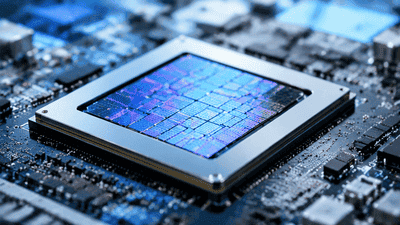
Biren’s BR100 established the company’s emphasis on high-performance data-center computing and multi-die integration.
Chiplets provide a way to combine substantial computing resources without placing every function on one monolithic die.
They can also allow selected functions to use different manufacturing approaches.
But the architecture introduces communication, packaging, and testing requirements. For Biren, the value depends on whether the assembled accelerator delivers a competitive balance of performance, reliability, and cost—not merely whether the design contains multiple dies.
Large Systems Extend the Competition Beyond the Card
Industry reporting in September 2026 described Biren’s emphasis on large-scale training and a 1,024-card supernode solution shown at the year’s World Artificial Intelligence Conference.
That indicates a system-level direction, not proof that every proposed system was already deployed at commercial scale.
The distinction is important because connecting many accelerators creates a different engineering problem from producing one capable card.
Networking, scheduling, collective communication, and recovery behavior determine how much aggregate hardware becomes useful computation.
Why Iteration Matters More Than a Single Specification
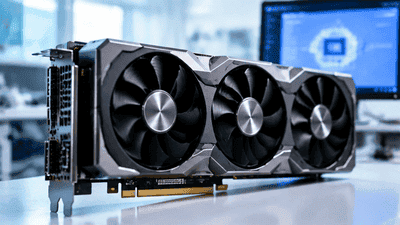
A first-generation product establishes capability. Later generations test whether the company can improve without disrupting its users.
Customers need software continuity, predictable performance, and a manageable upgrade path.
A dramatic architecture change can be valuable, but it can also create migration work or delay adoption.
For both companies, the strongest evidence would be repeat deployment across generations. That would show customers are investing in a platform rather than conducting an isolated evaluation.
The Software Stack Is the Hardest Asset to Replicate
A programmable GPU requires compilers, libraries, drivers, runtime support, diagnostics, and application integration.
Those components influence correctness as well as performance.
A chip can possess substantial theoretical computing capability while delivering modest application results if software cannot use it effectively.
For Moore Threads, MUSA is therefore not an accessory to the processor. For Biren, the corresponding software environment is equally central to making a data-center architecture commercially usable.
Migration Claims Need Workload-Level Verification
Domestic GPU suppliers frequently emphasize compatibility with familiar frameworks or tools that simplify code conversion.
Those capabilities can reduce adoption effort.
They do not guarantee that every custom kernel, extension, or distributed workflow transfers without adjustment.
For buyers, the useful test is the actual application. A model that runs correctly may still require optimization before it reaches acceptable speed, memory use, or reliability.
Framework Support Is Only the First Layer
A framework contains many operators and execution paths.
Support for its name does not establish that every operator, precision, and configuration is equally mature.
Serving and training software can also change quickly.
For procurement teams, a compatibility assessment should identify the specific model, libraries, plug-ins, and operating environment. This provides more actionable evidence than a broad declaration of ecosystem compatibility.
Numerical Formats Need Context
FP64, FP32, BF16, FP16, FP8, and integer formats serve different purposes and carry different precision characteristics.
Peak performance figures measured in one format cannot be directly compared with another.
Sparsity assumptions and other counting conventions can also change the headline.
For Moore Threads and Biren comparisons, model quality must remain part of the evaluation. A higher arithmetic rating is useful only when the workload can use that format without unacceptable changes in behavior.
Memory Can Limit a General-Purpose GPU
AI workloads need capacity for model weights, working buffers, and—in many inference applications—cached state.
Bandwidth determines how quickly that information can reach computing resources.
A processor with abundant arithmetic capability may remain constrained by its memory subsystem.
For domestic GPU roadmaps, memory procurement and qualification therefore matter alongside architecture. A new generation must improve the balance of resources rather than increase compute while leaving another bottleneck unchanged.
Training and Inference Reward Different Strengths
Training can require sustained distributed execution, demanding communication, and dependable recovery from failures.
Inference emphasizes a different combination of response time, throughput, working-memory requirements, and operating cost.
A platform can perform well in one setting without being the preferred choice in another.
For market forecasts, the companies’ adoption should be segmented by workload. “AI compute” is too broad to establish what customers will buy or how productively they will use it.
Cluster Scaling Is a Performance Multiplier—and a Risk
Adding accelerators increases potential resources, but the workload must distribute effectively.
Communication overhead can consume part of the gain, while imbalance can leave devices waiting.
Long-running jobs also create operational demands beyond benchmark performance.
For Biren’s system-oriented strategy, the relevant result is completed workload performance across the cluster. For Moore Threads, integrated systems face the same requirement even when the product message begins with a universal GPU.
Manufacturing Access Shapes the Roadmap
A chip design requires fabrication, packaging, memory, testing, and reliable delivery.
Restrictions or shortages in any of those stages can change the commercial schedule.
An architecture announcement does not establish that all manufacturing resources are secured for the intended volume.
For investors, the production route should be evaluated separately from design capability. Where companies do not disclose current arrangements, assumptions about foundries, nodes, or available wafers should remain clearly identified as assumptions.
Domestic Design Does Not Establish Complete Localization
A Chinese-designed GPU can still depend on external tools, manufacturing technology, memory, materials, or components.
Domestic computing capacity and a fully localized supply chain are different measures.
The first can expand while the second remains incomplete.
This distinction prevents strategic importance from becoming an unsupported claim of total independence. The meaningful assessment maps dependencies across the full production chain and examines how they affect continuity.
Export Controls Add Uncertainty, Not a Simple Outcome
Restrictions can affect transactions involving semiconductor technology, equipment, software, and selected entities.
The legal scope depends on the current rules and the circumstances of the transaction.
For product roadmaps, that means supply assumptions can change during development.
Businesses need transaction-specific compliance review. Analysts should avoid treating either unrestricted access or complete isolation as a permanent fact unless the relevant evidence supports it.
Capital Helps, but Does Not Replace Engineering
Domestic GPU development requires sustained spending before a platform reaches mature commercial economics.
Funding can support chip development, software, inventory, and customer engagement.
It cannot guarantee that those investments produce qualified products or repeat customers.
For Moore Threads and Biren, financial resources are an enabling condition. The operating test remains whether successive products deliver enough value to support their development and production costs.
Demand Must Become Productive Utilization
A purchase announcement demonstrates interest. An installed system demonstrates delivery.
Neither automatically establishes that customers are using the hardware efficiently.
Software readiness, staff expertise, power, cooling, and suitable workloads influence the final result.
For commercial analysis, sustained operation and follow-on purchases provide stronger evidence than one large deployment headline. A platform becomes durable when customers continue expanding it because the experience works.
Price Should Include the Transition
A lower accelerator price can be attractive, but migration and support require resources.
Customers may need to adapt software, retrain staff, validate results, or maintain multiple implementations.
Power and infrastructure costs also influence the comparison.
The useful measure is total cost per acceptable workload outcome. Domestic availability can have strategic value, but that value should be assessed alongside the practical cost of using the platform.
What Would Confirm Progress in the Iteration Race?
The clearest indicators connect product development with repeat commercial use.
- Separate architecture announcements from production shipments.
- Track software improvements across successive generations.
- Evaluate named workloads under consistent precision and quality requirements.
- Measure cluster performance alongside single-card capability.
- Assess memory, packaging, and manufacturing readiness.
- Identify repeat customers and sustained utilization.
- Include migration, support, power, and facilities in cost comparisons.
- Avoid unsupported market-share or performance rankings.
These measures make the competition understandable without reducing it to a specification contest.
Two Strategies, One Commercial Standard
Moore Threads is pursuing a broad GPU platform with an expanding software environment. Biren emphasizes high-performance data-center architecture and system scale.
Their approaches are different, but both need to demonstrate continuity: reliable products, workable software, dependable manufacturing, and customers willing to return.
China’s general-purpose AI compute path will be judged by that accumulated execution. The decisive milestone is not the next impressive chip announcement. It is the moment a platform becomes ordinary enough to trust with important work—and capable enough to keep improving.